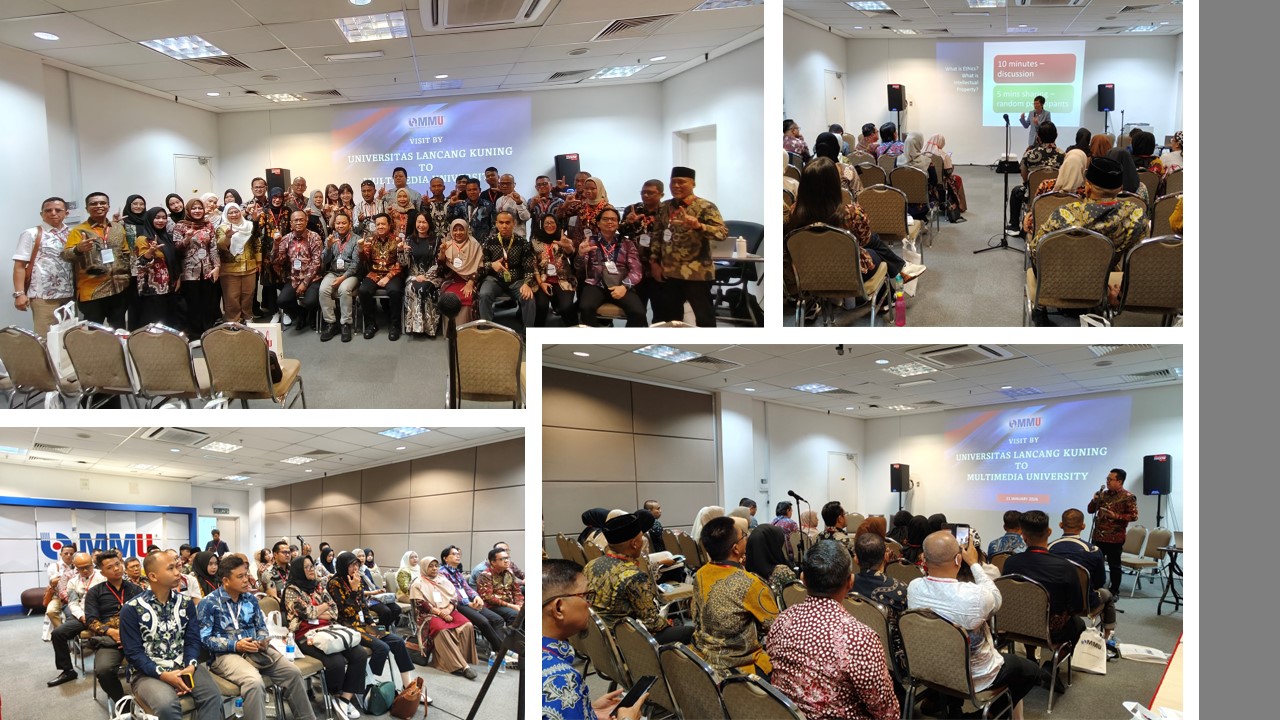
In January 2026, an academic sharing session focusing on law, governance, and artificial intelligence (AI) brought together academics and students from Universitas Lancang Kuning (UNILAK), Indonesia, and MMU. The session began with welcoming remarks by Dr Thong Li Wah, Deputy Director of the International Collaboration and Engagement (ICE) Office, who underscored the importance of cross-institutional collaboration in addressing emerging legal and technological developments.
Representing MMU, Assistant Professor Dr Olivia Tan Swee Leng delivered a keynote presentation titled “The Impact of Artificial Intelligence (AI) on Law and Governance”, which examined intellectual property issues and ethical considerations related to AI-powered learning and teaching environments. From UNILAK, Dr Yetti S.H presented “Implementasi UU Anti Monopoli dalam Praktik Bisnis di Indonesia”, offering insights into the application of Indonesia’s anti-monopoly laws in contemporary business contexts. The session was further enriched by a student presentation from Ms Michelle Hong of UNILAK, who discussed regulatory and legal considerations surrounding AI-based deepfake technology in Indonesia. The session was attended by approximately 40 participants and led by Prof. Dr Fahmi, S.H., Dean of the Faculty of Law, Universitas Lancang Kuning.
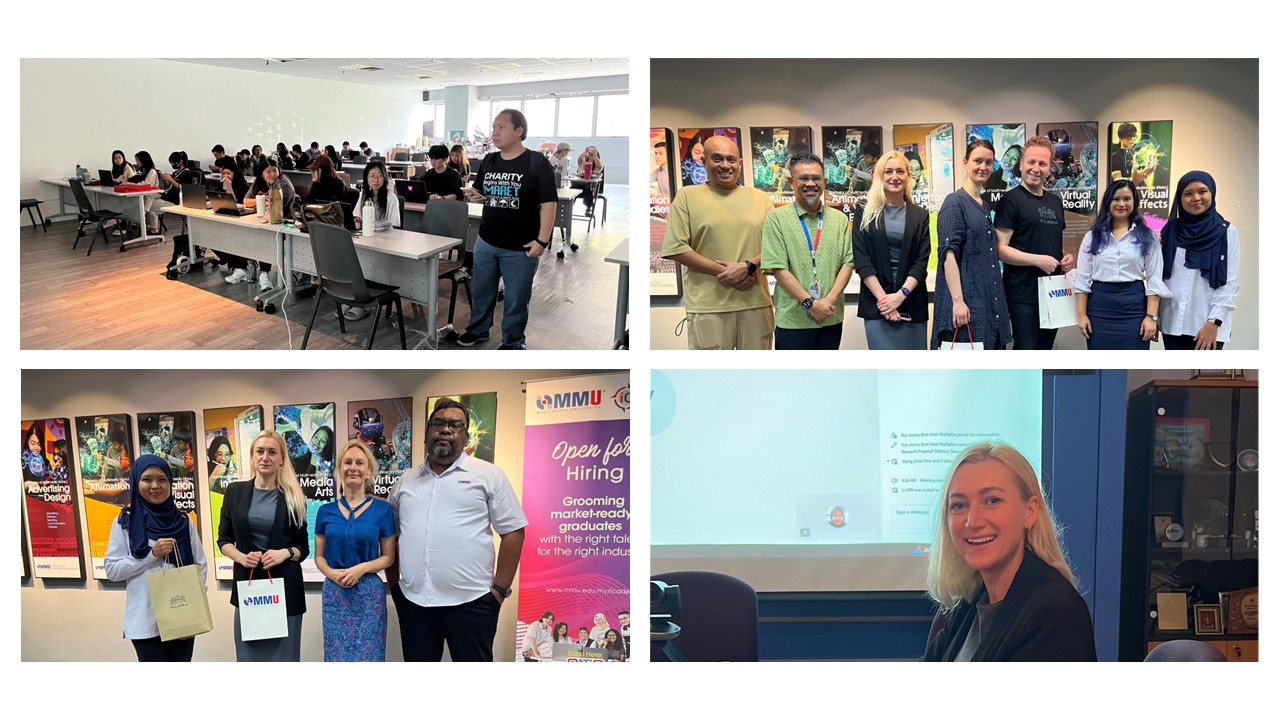
In a separate engagement, a delegation from Riga Technical University Liepāja (RTU Liepāja), Latvia, conducted an academic visit to MMU under the Erasmus+ collaboration framework. The delegation, comprising Ērika Lauberga-Sleže, Maija Demitere, and Rogier Gerben Jupijn, engaged with MMU’s academic community through a series of talks and workshops.
During the visit, the RTU Liepāja team conducted sessions for students from the Faculty of Creative Multimedia (FCM) and the Faculty of Applied Communication (FAC), focusing on areas such as interactive media and intercultural communication. These sessions provided students with exposure to international perspectives, contemporary practices, and cross-cultural collaboration in creative and communication-related disciplines.
Facilitated by International Collaboration and Engagement (ICE) Office, both engagements served as platforms for academic exchange and knowledge sharing, while also opening avenues for future collaboration, including student and staff mobility programmes, joint academic activities, and research initiatives. The initiatives help to strengthen international partnerships and enhance global learning experiences for its academic community.