The Centre for Lifelong Learning and Academic Content Development (LEAD) recently conducted two training programmes to enhance the understanding and capabilities of academic and administrative staff involved in the implementation of the Accreditation of Prior Experiential Learning (APEL).
The programmes brought together 51 participants from MMU Cyberjaya and MMU Melaka, covering two key areas: APEL.Q assessment practices and APEL.C documentation and candidate advisory.
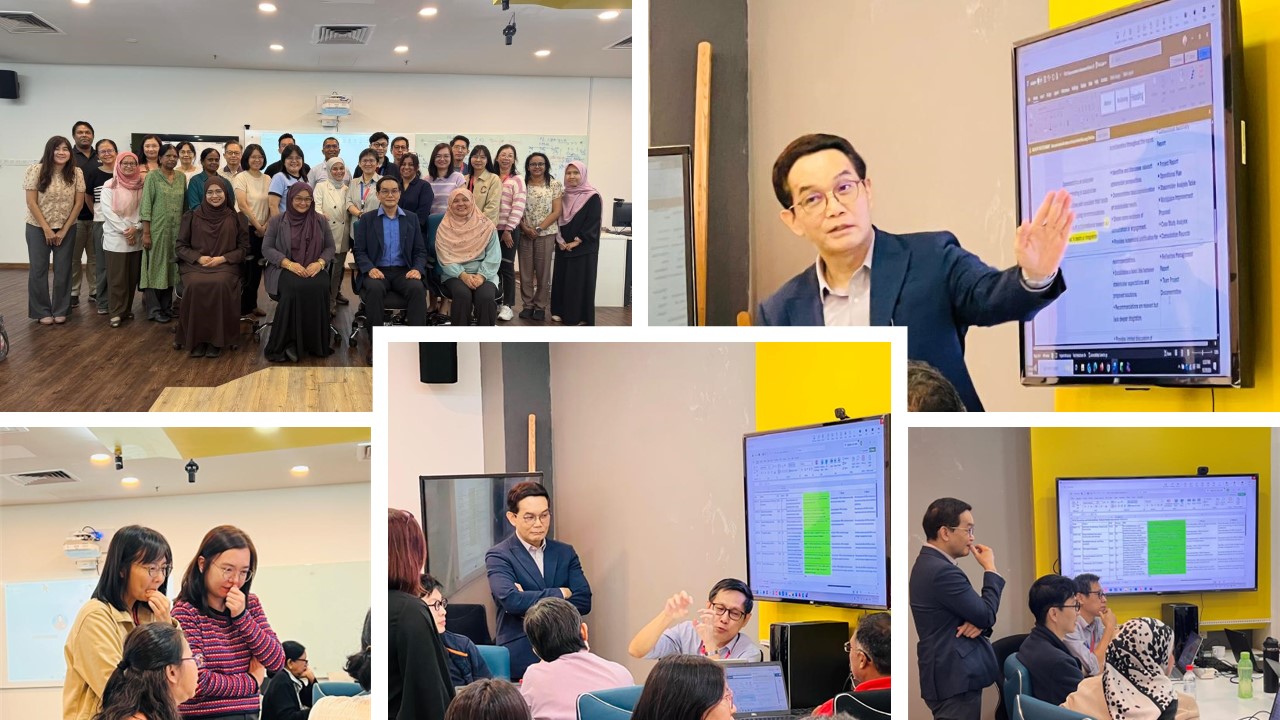
The first programme, APEL.Q in Practice: From Experiential Evidence to Defensible Academic Judgment, was held at Ideaslab, Faculty of Artificial Intelligence & Engineering in October 2026. Facilitated by Prof. Dr. Liew Teik Kooi (Andy), the two-day workshop was attended by 29 participants, including academic staff, assessors, moderators and APEL Centre administrative personnel.
The workshop focused on the development, application and moderation of assessment instruments for postgraduate programmes, particularly the Master of Business Administration (MBA) and Doctor of Business Administration (DBA). Participants were introduced to the Malaysia APEL Framework, the principles of lifelong learning and inclusivity, as well as the different types of APEL.Q assessments and the requirements for Malaysian Qualifications Framework (MQF) Levels 3 to 8.
The sessions also covered evidence-based assessment, academic judgment, assessment standardisation and quality assurance. Through practical exercises, participants worked on developing and refining assessment instruments, including assessment rubrics, criteria, performance descriptors and scoring guidelines for MBA and DBA programmes.
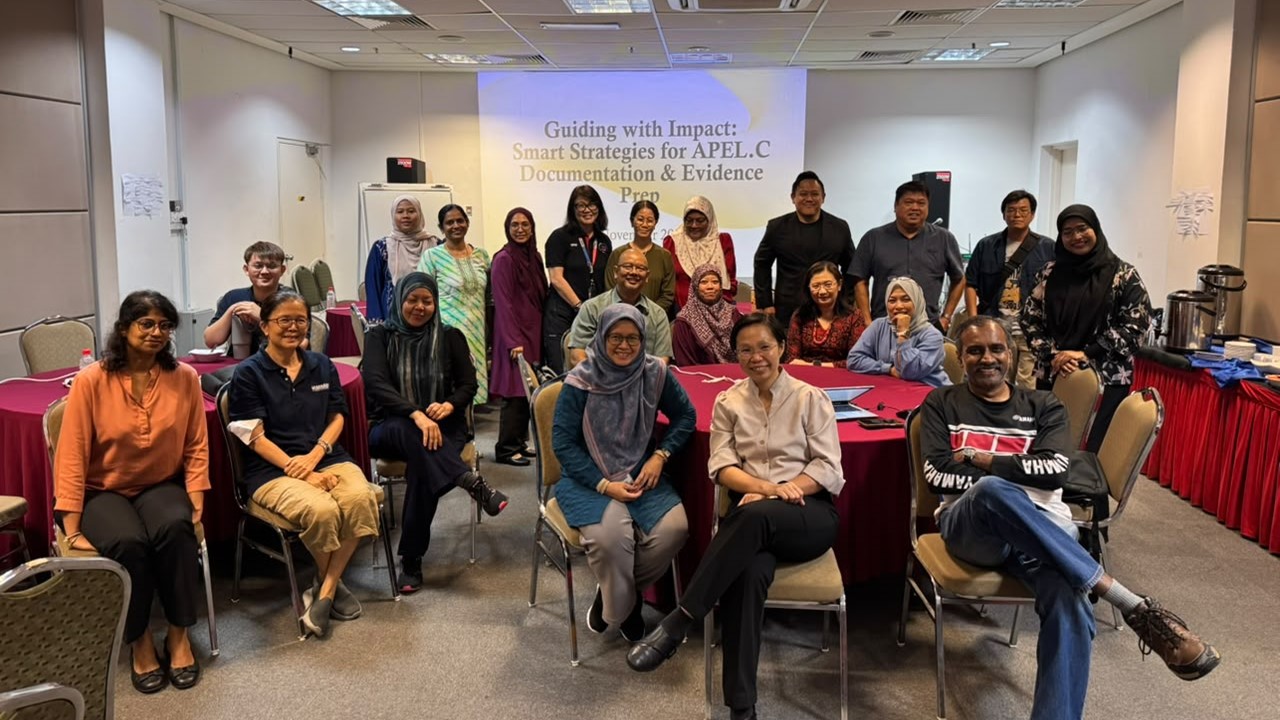
The second programme, Guiding with Impact: Smart Strategies for APEL.C Documentation & Evidence Prep, took place on 2 November 2026 at Studio B, Chancellery Building. The session was facilitated by Dr. Sun Poi Hun and attended by 22 participants, comprising academic staff, programme leaders and APEL Centre administrative personnel.
The training covered the fundamentals of APEL, with particular emphasis on APEL.C, including its principles, policies and regulations, credit award considerations, implementation processes and assessment methods. Participants also learned about the recognition of formal, non-formal and informal learning, as well as the roles and responsibilities of APEL.C panel members, namely Advisors, Assessors and Moderators.
In addition, the session focused on effective candidate advisory practices, including understanding applicants’ needs, conducting advisory sessions and using appropriate communication techniques. Practical advisory tools, checklists and case-based exercises were also shared to help participants guide candidates in preparing their documentation and supporting evidence.
Both programmes included interactive discussions and practical activities, allowing participants to gain a better understanding of the processes involved in APEL.Q and APEL.C implementation. The sessions also provided opportunities for participants to share experiences and discuss the challenges they may encounter in carrying out their respective roles.
Through these training programmes, LEAD continues to support the development of staff competencies in managing APEL processes and ensuring the quality of assessment and advisory practices at MMU. These efforts also reflect the university’s commitment to supporting lifelong learning and providing opportunities for prior learning and experience to be recognised through formal academic pathways.